
Craftsman Snowblower Owners Manual: A Comprehensive Guide
This manual, alongside resources like manualzz, provides essential guidance for Craftsman snowblower operation, maintenance, and troubleshooting.
Craftsman snowblowers are designed for efficient snow removal, offering various models to suit different needs. Understanding your specific model is crucial, as detailed in available owner’s manuals – resources like manualzz host these documents. These machines feature robust engines and effective auger systems. Proper operation, as outlined in the manual, ensures safety and longevity. Regular maintenance, including fuel stabilization for winter storage, is key. Accessing online resources, including speedtest.co.za for connectivity when downloading manuals, enhances the ownership experience.
Understanding Your Snowblower Model
Identifying your specific Craftsman snowblower model – like the Cx Series – is the first step. Refer to the owner’s manual (available on sites like manualzz) for detailed specifications. This includes engine details, auger and impeller system information, and drive system specifics. Knowing these components aids in maintenance and troubleshooting. Understanding control panel functions, electric start features, and snow chute adjustments, as described in the manual, optimizes performance. Ensure a stable internet connection (testable via speedtest.co.za) when accessing digital manuals.
Safety First: Operating Procedures
Prioritize safety by performing pre-operation checks and adhering to safe starting/stopping procedures detailed in the Craftsman manual.
Pre-Operation Checks
Before each use, thoroughly inspect your Craftsman snowblower. Verify the auger and impeller are free of obstructions, ensuring safe operation. Check fluid levels – fuel and oil – and top off as needed.
Confirm all safety shields, levers, and controls are functioning correctly. Examine the drive system for any signs of damage or wear. A quick visual inspection can prevent unexpected issues and ensure a smooth, safe snow removal experience.
Safe Starting and Stopping Procedures
Always start the snowblower outdoors or in a well-ventilated area. Ensure the auger is disengaged before starting. Utilize the electric start feature if equipped, following the manual’s instructions carefully.
To stop, disengage the auger and drive system before shutting off the engine. Allow the engine to cool completely before storing or performing maintenance. Never leave a running snowblower unattended.
Avoiding Common Hazards
Never put hands or feet near the rotating auger and impeller. Avoid throwing snow towards people, vehicles, or property. Be cautious of hidden obstacles like ice patches or uneven terrain.
Always wear appropriate safety gear, including eye protection and sturdy footwear. Do not operate the snowblower while fatigued or under the influence of drugs or alcohol.

Component Overview
Understanding the engine specs, auger/impeller, and drive system is crucial for effective operation and maintenance of your Craftsman snowblower.
Engine Specifications
Craftsman snowblowers utilize various engine types, typically Briggs & Stratton or similar, with specifications varying by model. Key details include displacement (typically ranging from 208cc to 277cc), fuel capacity (around 24-30 ounces), and oil capacity (approximately 15-20 ounces);
Understanding these specifications is vital for proper fuel mixing (if applicable), oil changes, and overall engine health. Refer to your specific model’s documentation for precise values, as these can significantly impact performance and longevity.
Auger and Impeller System
The Craftsman snowblower’s auger, a spiral screw, gathers snow while the high-speed impeller throws it through the discharge chute. Systems vary; some feature single-stage augers for lighter snow, while others employ two-stage systems for heavier, wetter conditions.
Regular inspection for wear and damage is crucial. Ensure shear pins are in good condition to prevent damage during obstructions. Proper auger and impeller function directly impacts clearing width and throwing distance.
Drive System Details
Craftsman snowblowers utilize various drive systems, including single-speed and multi-speed options, often with power steering for enhanced maneuverability. These systems transmit engine power to the wheels, enabling forward and reverse movement.
Inspect drive belts regularly for wear or damage, as these are critical for proper operation. Maintaining appropriate tire pressure also contributes to optimal traction and control, especially on slippery surfaces.

Maintenance Schedule
Regular and seasonal maintenance, including long-term storage preparation, ensures optimal performance and extends the lifespan of your Craftsman snowblower.
Regular Maintenance Tasks
Consistent upkeep is crucial for reliable snow removal. Before each use, inspect the auger and impeller for damage or obstructions, ensuring free rotation. Check oil levels and add if necessary, utilizing the specified fuel type.
Regularly examine the drive system for wear and tear, and maintain proper tire inflation. Clean the snow chute after each use to prevent ice buildup. Furthermore, inspect all bolts and fasteners, tightening as needed to guarantee structural integrity and safe operation throughout the winter season.
Seasonal Maintenance
As the snow season ends, thorough seasonal maintenance is vital. Begin by completely draining the fuel tank to prevent gumming and carburetor issues, followed by fuel stabilization if long-term storage is anticipated. Inspect and lubricate all moving parts, including the auger and drive system, to prevent corrosion.
Remove any accumulated snow and ice, and clean the exterior surfaces. Finally, store the snowblower in a dry, protected area, covering it to shield it from dust and the elements, ensuring it’s ready for the next winter.
Long-Term Storage
Preparing your Craftsman snowblower for extended storage is crucial. After seasonal maintenance, ensure the fuel tank is empty or treated with a fuel stabilizer to prevent degradation. Disconnect the spark plug wire for safety and apply a corrosion inhibitor to metal parts.
Store the unit in a dry, covered location, protecting it from moisture and extreme temperatures. A breathable cover is recommended to prevent condensation. Regularly check and maintain battery charge if equipped with electric start.
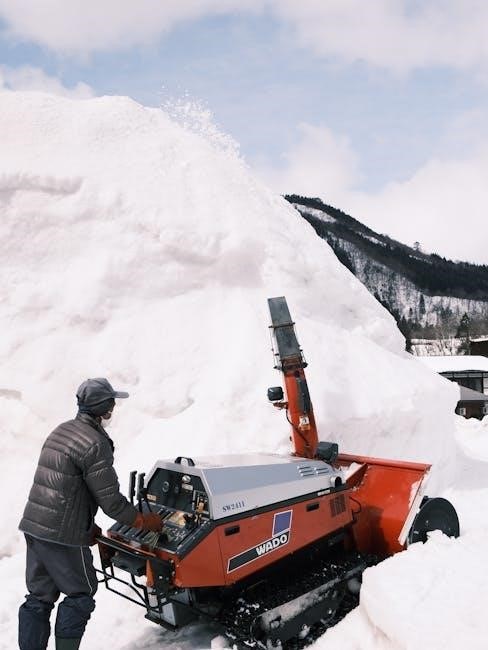
Troubleshooting Common Issues
This section details solutions for typical problems like engine failure, auger malfunctions, and drive system issues, ensuring optimal snow removal performance.
Engine Won’t Start
If your Craftsman snowblower engine fails to start, first verify the fuel tank isn’t empty and the fuel shut-off valve is open. Check the spark plug for fouling or damage, replacing it if necessary. Ensure the spark plug wire is securely connected. A common issue is a clogged carburetor; cleaning or replacing it might be required.
Also, confirm the safety interlock switches are functioning correctly. Low oil levels can also prevent starting, so check the oil level and add if needed. Finally, for electric start models, verify the battery is charged and connections are clean.
Auger Not Engaging
When the auger fails to engage, initially check for obstructions like dense snow or ice buildup within the auger housing. Disconnect the spark plug wire before attempting to clear any blockages manually! Verify the auger drive belt is intact and properly tensioned; a broken or loose belt will prevent operation.
Inspect the auger shear pins for breakage – these are designed to protect the gearbox. Replace any broken shear pins with the correct replacements. Finally, ensure the auger engagement lever is fully engaged and functioning smoothly.
Drive System Problems
If the drive system isn’t functioning, first confirm the drive engagement lever is fully activated. Check the drive belt for wear, damage, or slippage – a replacement may be necessary. Inspect the belt’s tension; adjust if needed.
Examine the shear keys on the drive axle; these protect the gearbox and will need replacement if sheared. Ensure the transmission fluid level is correct, if applicable, and that there are no leaks. A faulty transmission could also be the cause.

Parts and Accessories
Genuine Craftsman parts and compatible accessories are crucial for optimal performance; explore options on eBay and through authorized Craftsman retailers for replacements.
Finding Replacement Parts
Locating replacement parts for your Craftsman snowblower is essential for maintaining its functionality and extending its lifespan. A primary resource is eBay, offering a wide selection of both new and used components. Additionally, authorized Craftsman retailers and service centers stock genuine parts. When ordering, always have your snowblower’s model number readily available to ensure compatibility. Websites specializing in outdoor power equipment parts can also be valuable resources, providing detailed diagrams and part numbers. Prioritize genuine Craftsman parts whenever possible to guarantee quality and performance.
Compatible Accessories
Enhance your Craftsman snowblower’s performance with compatible accessories designed for optimal operation. These include snowblower covers for protection, skid shoes to prevent surface damage, and remote control kits for added convenience. Consider cab enclosures for operator comfort in harsh weather. Extension cords are vital for electric start models, and shear pins are crucial for auger protection. Always verify accessory compatibility with your specific snowblower model before purchasing. Utilizing the correct accessories ensures efficient snow removal and prolongs the life of your equipment.
Craftsman Snowblower Parts eBay
eBay offers a vast selection of Craftsman snowblower parts, both new and used, for various models and years. Finding replacement components like auger parts, shear pins, drive belts, and engine components is often straightforward. Before purchasing, carefully verify the part number matches your snowblower’s specifications to ensure compatibility. Numerous sellers specialize in Craftsman snowblower parts, providing competitive pricing and shipping options. Remember to check seller ratings and return policies for a secure transaction and reliable parts sourcing.

Detailed Operating Instructions
Mastering snow chute adjustment, electric start, and control panel functions ensures efficient snow removal, maximizing your Craftsman snowblower’s performance.
Adjusting Snow Chute Direction
Precisely controlling snow discharge is crucial for efficient clearing. Locate the chute rotation control – typically a lever or knob – on your Craftsman snowblower’s control panel.
Smoothly operate this control to direct the snow stream left or right, avoiding obstacles and maximizing coverage. Some models feature remote chute controls for added convenience.
Ensure the chute is securely locked in the desired position before operation. Regularly check for any looseness and adjust as needed to maintain optimal directional control during snow removal.
Using the Electric Start Feature
Craftsman snowblowers with electric start offer convenient, push-button ignition. Before use, ensure the unit is plugged into a grounded outlet or the battery is fully charged.
Turn the ignition switch to the ‘start’ position and depress the electric start button. Release the button immediately upon engine ignition to prevent starter damage.
If the engine doesn’t start, consult the troubleshooting section; avoid prolonged button presses. Regular battery maintenance is vital for reliable electric start performance.
Understanding Control Panel Functions
The Craftsman snowblower control panel houses essential operating features. Key controls include the ignition switch, electric start button (if equipped), and auger/drive engagement levers.
Familiarize yourself with the chute control, allowing directional snow discharge adjustment. The speed control regulates the machine’s forward movement.
Safety features, like the deadman control, require constant engagement for operation. Refer to diagrams within the manual for precise control locations and functions.
Technical Specifications
Detailed dimensions, weight, fuel requirements, and noise level data are crucial for optimal performance and safe operation of your Craftsman snowblower.
Dimensions and Weight
Understanding the physical specifications of your Craftsman snowblower is vital for maneuvering and storage. Dimensions vary significantly between models, impacting garage space requirements and ease of use in tight areas. Weight is another critical factor; heavier models offer increased stability in challenging snow conditions but can be more difficult to handle.
Consult your specific model’s documentation for precise measurements – length, width, and height – as well as the overall operating weight. This information ensures safe operation and proper storage solutions throughout the winter season.
Fuel Requirements
Proper fuel selection is crucial for optimal Craftsman snowblower performance and longevity. Most models require fresh, unleaded gasoline with an octane rating of 87 or higher. Always check your specific model’s manual for confirmation, as requirements can differ.
Using stabilized fuel, especially during storage, prevents degradation and ensures easy starting next season. Avoid ethanol blends exceeding 10% (E10) as higher concentrations can damage fuel lines and components. Prioritize fuel quality for reliable operation.
Noise Level
Craftsman snowblowers, like most gasoline-powered equipment, generate a considerable noise level during operation. Typical noise levels range from 85 to 100 decibels (dB), depending on the model and operating conditions.
Prolonged exposure to such noise can cause hearing damage; therefore, wearing appropriate hearing protection – earplugs or earmuffs – is strongly recommended. Be mindful of neighbors and local noise ordinances when operating your snowblower.

Warranty Information
Craftsman snowblower warranties cover defects in materials and workmanship; details vary by model, including the Cx Series, and require a specific claim process.
Coverage Details
Craftsman snowblower warranty coverage typically includes defects in materials and workmanship under normal residential use. The duration varies significantly depending on the specific model purchased, with some offering limited coverage for a year, while others extend to several years.
Crucially, the warranty doesn’t cover damage resulting from misuse, accidents, lack of maintenance, or commercial applications. Parts and labor may be covered, but certain components like wear items (skid shoes, shear pins) are often excluded.
Always retain proof of purchase for warranty claims, and carefully review the full warranty documentation accompanying your Craftsman snowblower for precise terms and conditions.
Claim Process
To initiate a warranty claim for your Craftsman snowblower, first gather your proof of purchase and the model/serial number. Contact Craftsman customer support via their website or phone number to obtain a claim form and instructions.
You may be required to provide detailed information about the defect, along with photos or videos as evidence.
Depending on the issue, Craftsman may authorize repair at a local service center, request the return of the defective part, or offer a replacement unit.
Craftsman Cx Series
The Craftsman Cx Series snowblowers represent a modern evolution in snow removal technology, offering enhanced features and performance. These models often include improved engine designs, more robust auger systems, and user-friendly controls.
Owners of Cx Series snowblowers should consult their specific model’s manual for detailed operating instructions and maintenance schedules.
Finding compatible parts and accessories for the Cx Series can be done through Craftsman’s official website or retailers like eBay.

Online Resources
Access Craftsman snowblower manuals on manualzz, and test your internet speed using speedtest.co.za or the MyBroadband Speed Test app.
Craftsman Snowblower Manuals (manualzz)
Manualzz serves as a valuable online repository for Craftsman snowblower documentation, including operator’s manuals for models like the 536.8884. These downloadable PDFs offer crucial insights into your snowblower’s functionality, safety procedures, and maintenance schedules. Accessing these manuals is particularly helpful for understanding specific model features and troubleshooting common issues. The platform provides a convenient way to obtain replacement manuals if the original is lost or damaged, ensuring you always have access to essential operating information. It’s a readily available resource for Craftsman snowblower owners seeking detailed guidance.
Speed Tests for Internet Connection (speedtest.co.za)
While seemingly unrelated to snowblowers, assessing your internet speed via speedtest.co.za is crucial for downloading Craftsman snowblower manuals and troubleshooting guides. A reliable connection ensures quick access to resources like manualzz and YouTube videos demonstrating repairs. Accurate speed tests, alongside MyBroadband’s options, confirm you’re receiving the bandwidth you pay for, facilitating efficient online research for parts and maintenance information. Stable internet is vital for accessing Craftsman’s online support and warranty details.
MyBroadband Speed Test App
Though focused on internet performance, the MyBroadband Speed Test App indirectly supports Craftsman snowblower ownership. A stable, fast connection is essential for downloading operator’s manuals, accessing parts lists on eBay, and watching instructional videos. The app’s ability to test ping, download, and upload speeds ensures seamless access to online resources. Confirming your ISP delivers promised speeds streamlines troubleshooting and facilitates efficient ordering of replacement components, maximizing uptime for winter snow removal.
Winterizing Your Snowblower
Proper winterization, including fuel stabilization and corrosion prevention, ensures your Craftsman snowblower is ready for reliable operation next season.
Fuel Stabilization
Before long-term storage, stabilizing the fuel is crucial to prevent degradation and gumming within the Craftsman snowblower’s engine. Gasoline left untreated can separate and create deposits, leading to starting difficulties next winter. Add a fuel stabilizer, following the manufacturer’s instructions carefully, to a nearly full fuel tank.
Run the engine for a few minutes to circulate the stabilized fuel throughout the fuel system. This ensures all components are protected. Consider draining the fuel completely as an alternative, though this requires extra care and disposal procedures.
Corrosion Prevention
Protecting your Craftsman snowblower from corrosion is vital for longevity, especially given exposure to salt and moisture during winter operations. After each use, wipe down the machine with a clean, dry cloth, paying attention to the undercarriage and areas prone to salt buildup.
Applying a corrosion inhibitor spray to metallic parts can provide an extra layer of defense. Store the snowblower in a dry environment, ideally covered, to minimize exposure to the elements and prevent rust formation.
Proper Storage Techniques
To ensure your Craftsman snowblower remains in optimal condition during the off-season, proper storage is crucial. Clean the machine thoroughly, removing all snow and ice residue. Stabilize the fuel to prevent gumming and damage to the carburetor. Store the snowblower in a dry, sheltered location, such as a garage or shed.
Covering the unit protects it from dust and debris. Consider using a dedicated snowblower cover for added protection against the elements and potential damage.